What paint
protection film is
The definition, in one paragraph
PPF — paint protection film — is a clear polyurethane film — TPU, or PCU for our G7X — applied over a car's paint so that it takes the damage instead. NexusCo films are 7.5 mil thick, around 190 microns: a flexible layer that absorbs stone chips, wash marks, insects and acidic bird droppings, and filters the UV that fades paint over time. Its topcoat is self-healing, meaning fine scratches close up under heat — sunlight is enough. It comes in a gloss finish, invisible once fitted, or satin if you want to change how the paint looks without respraying. It removes cleanly, without residue, leaving the original paint intact: that is the whole point when you come to sell. Expect at least its warranty term — six to fifteen years depending on the film — provided it is fitted professionally, and it is sold both by the roll to trade and fitted directly for owners.
A scratch that disappears with heat
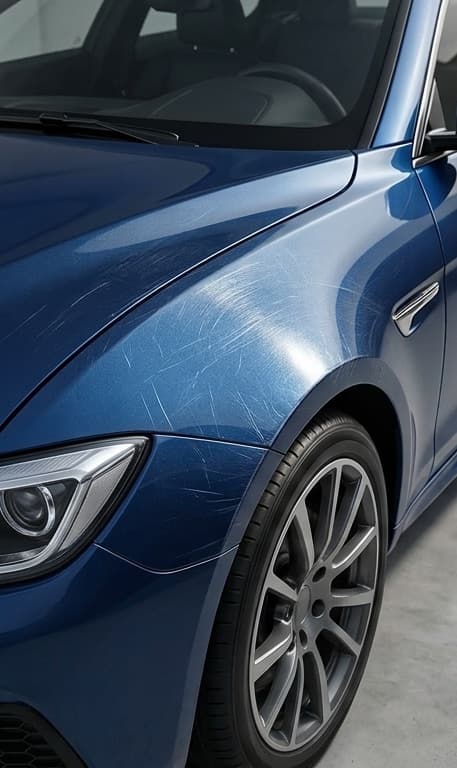
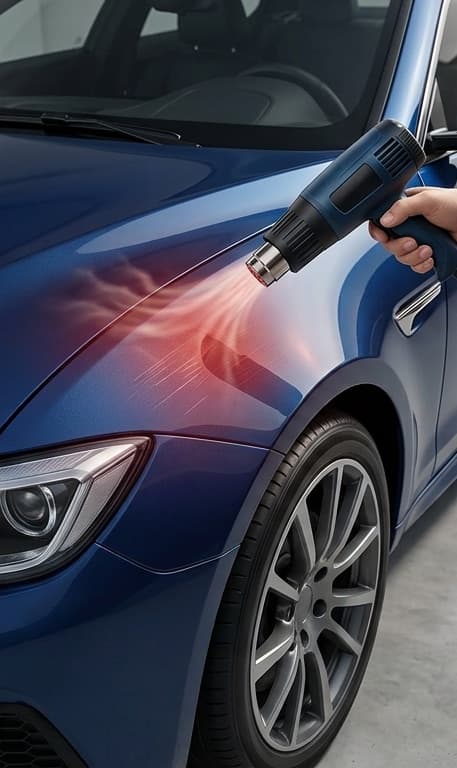
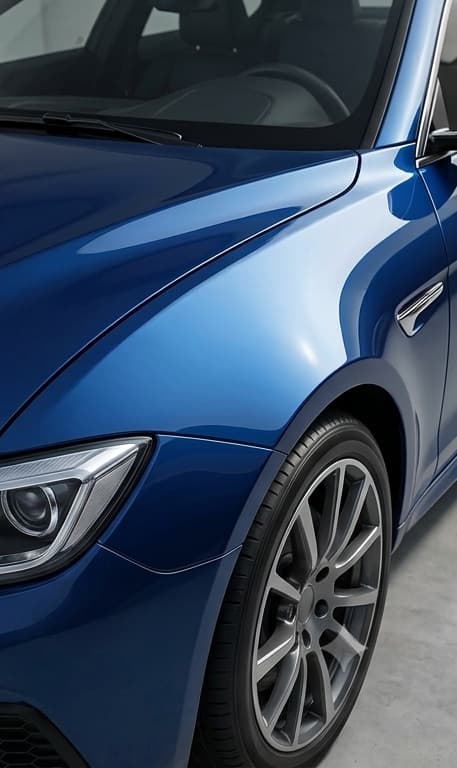
Self-healing is not a marketing line, it is a property of the elastomeric topcoat. It deforms under light stress and returns to shape as the temperature rises. Here is what that looks like on a panel.
 01
01The scratch forms
A sponge carrying grit, a jacket sleeve, a branch: the fine scratch bites into the topcoat, not the paint. The film has already taken it.
 02
02Heat does the work
Sunlight, hot water or a heat gun on low is enough. The polymer regains mobility and the deformation closes on itself.
 03
03The surface evens out
The scratch goes without polishing, so without removing material. A polished panel gets thinner every time; a film that heals does not.
Three technologies people confuse
This is the most common confusion, and an expensive one: many owners believe a ceramic coating protects against stone chips. It does not. Here is what each one actually does.
| Technology | Protects against | Thickness | Life | Reversible | Relative price |
|---|---|---|---|---|---|
| PPF | Stone chips, scratches, insects and acidic droppings, UV | ≈ 190 µm (7.5 mil) | 6 to 15 years | Yes, clean removal | The highest of the three |
| Ceramic coating | Chemical attack and UV, makes washing easier. Absorbs no impact | A few microns | 2 to 5 years | No, it wears away | Considerably cheaper than PPF |
| Vinyl wrap | Surface scratches, and changes the car's colour. Does not absorb stone chips | ≈ 100 µm | 3 to 7 years | Yes | Below PPF, without matching its protection |
The two are not exclusive: a ceramic coating applied over PPF makes the film easier to wash and a little more hydrophobic. That is the usual combination on well-kept cars. A wrap answers a different question — changing the look — and was never designed to take a motorway stone chip.
What PPF does not do
Anyone promising you the film solves everything is setting up a disappointment. Here is the exact line between what it takes and what is not its job.
What it takes
- Motorway stone chips, the number one cause of paint damage
- Fine scratches and swirl marks from washing
- Insects and bird droppings, whose acidity attacks the clear coat
- UV, which dulls and fades paint season after season
- Light door and handle scuffs
What it does not
- A car park impact that dents the panel: film is not armour
- Paint that is already damaged — it seals it as it is, it does not repair it
- Existing rust, which carries on working underneath
- Deep vandalism, a key that goes through the film to the metal
- Routine care: a filmed car still needs washing
Three things separating a good film from a bad one
- Aliphatic TPU, not PVC
- Aliphatic polyurethane is UV-stable: its molecular structure does not break down in sunlight. Cheap films are PVC or aromatic polyurethane, whose plasticisers migrate and yellow — two Moroccan summers are enough to see it on a white car. It is the most expensive difference to correct, because it only shows up after fitting.
- What 7.5 mil means
- One mil is a thousandth of an inch, or 25.4 microns. A 7.5 mil film is therefore around 190 microns thick — close to double a vinyl wrap, and nothing like the few microns of a ceramic coating. That thickness is what absorbs the energy of a stone instead of passing it to the paint.
- Does the warranty cover the fitting?
- Commercial film warranty: 15 years for G7X, 10 years for G7 and 6 years for S7. Installation is a separate service and is not covered by this warranty. The NexusCo commercial warranty applies to film sold to installers and individual customers. It covers product defects under the warranty conditions. Installation, removal, refitting and installation faults are not covered by this warranty, including when NexusCo installs the film.
Frequently asked
That leaves
the budget
You now know what the film does and what it does not. The pricing page gives the starting figure per package, what moves it, and what the quote already covers.